
Promotion
Sim-racing: definition
The word sim-racing is actually made up of two words: ” simulation ” and ” racing “, and it’s a category of video games for consoles and/or PC that groups together all titles that deal primarily with the simulation of motor racing.
Video game fans are no doubt familiar with titles such as Forza, Gran Turismo, Need For Speed, Dirt, and so on. These games are very popular because they’ve been around for many years and have greatly evolved over time. For example, the Need For Speed series is well known for its arcade-style games where fun is the name of the game. Here, you don’t have to worry about your car, because the only thing that counts is first place on the podium. Other video game series are the opposite of NFS, such as Gran Turismo and Forza Motorsport, with titles much more focused on realism and racing simulation.
The main aim of sim-racing is to offer an immersive and faithful experience of motor racing, but on a small screen. As a result, many players and peripheral manufacturers have stormed the sim-racing market with products that blur the line between simulation and reality. More on this later.
Simulation types
There are 3 main schools of sim-racing:
- The arcade type is the ticket to the virtual motorsport discipline. Here, the basic principle is to have fun and pass the time by driving exotic cars as fast as possible on freeways, country roads and even in the city. In the arcade category of sim-racing, we have a number of very popular titles, including Need For Speed and Forza Horizon. With these games, you’ll have access to a wide selection of cars, each more beautiful than the last, with the possibility of upgrading and customizing them, all set in breathtaking environments (especially on Forza) and sprinkled with a very rhythmic soundtrack. There’s no need to worry about the condition of your car, as it doesn’t take any damage, except perhaps cosmetic damage.
- The sim-arcade genre is more advanced than the arcade in the sense that you have titles that take up motorsport competitions such as F1. Unlike NFS and Forza, in sim-arcade games you have to take care of your driving, manage your vehicle and your season. The most popular titles are Gran Turismo, Forza Mortorsport and F1 2022 (as in other years). In the sim-arcade, drivers have to manage their fuel, tires, engine, bodywork and so on. Fine drivers and strategists will be rewarded with guaranteed victories, but still with room to manoeuvre. Oh yes, if it’s too difficult, no one will want to play it, and that’s only logical.
- The simulation type is the best for aspiring racers, and it’s on titles like Asseto Corsa and iRacing that real racing drivers train. For this guy, it’s simple: it’s a digital retranscription of what you’d find in a real car race. You’ve got qualifying, damage and car management, fine-tuning of suspension, brakes, tires and the whole shebang. And I’m not talking about the physics of the cars, which are just like the real thing: the vehicles behave as if you were behind the wheel at full throttle at Monza. Simulation is the ultimate in sim-racing, and it’s the titles in this category that aspiring drivers turn to.
The most popular sim-racing brands
As with Apple and Samsung in the smartphone market, there are some very popular sim-racing brands that occupy 3 distinct segments. You have the entry/mid-range segment, with manufacturers such as Logitech and Thrustmaster who offer inexpensive products designed to give you good value for money on arcade or even sim-arcade titles. This segment is characterized by fairly old-fashioned technologies, notably corroie/gear drive bases, but which do the trick for the average rider looking for a bit of fun.
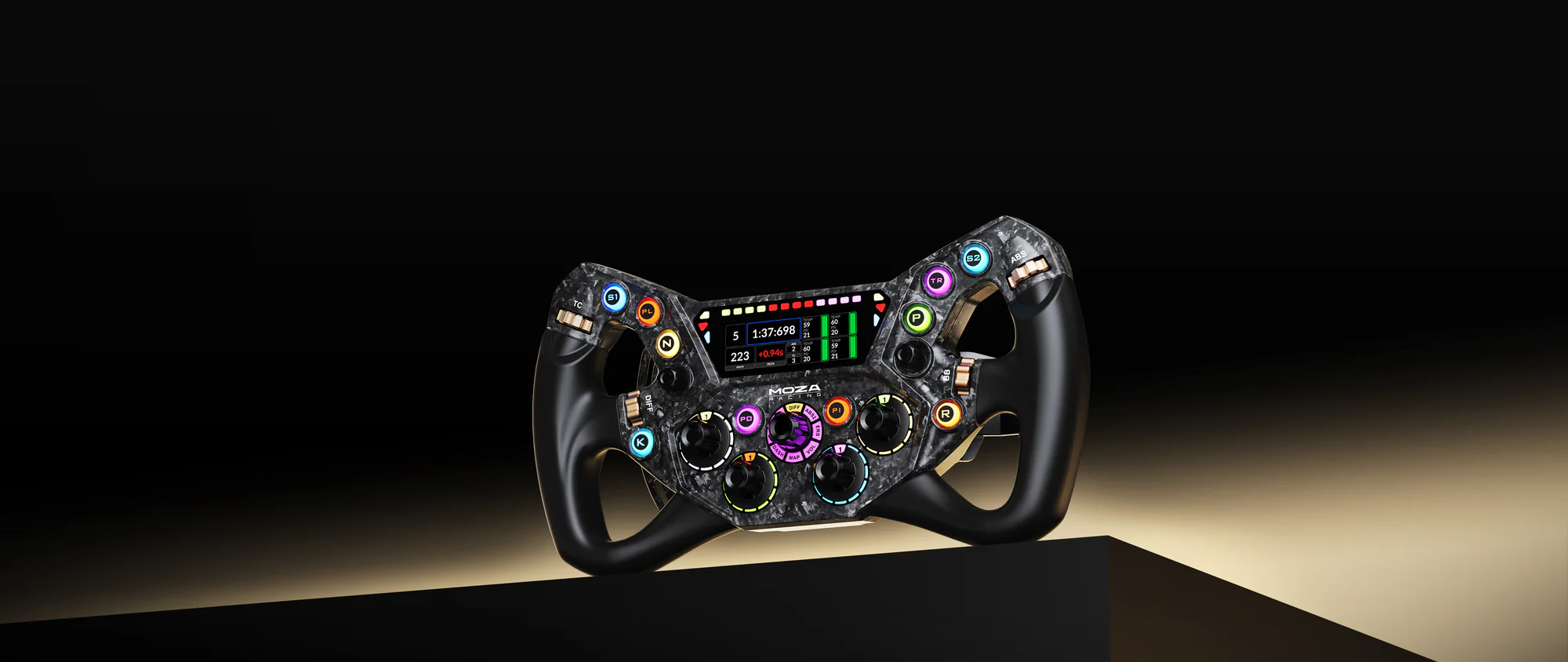
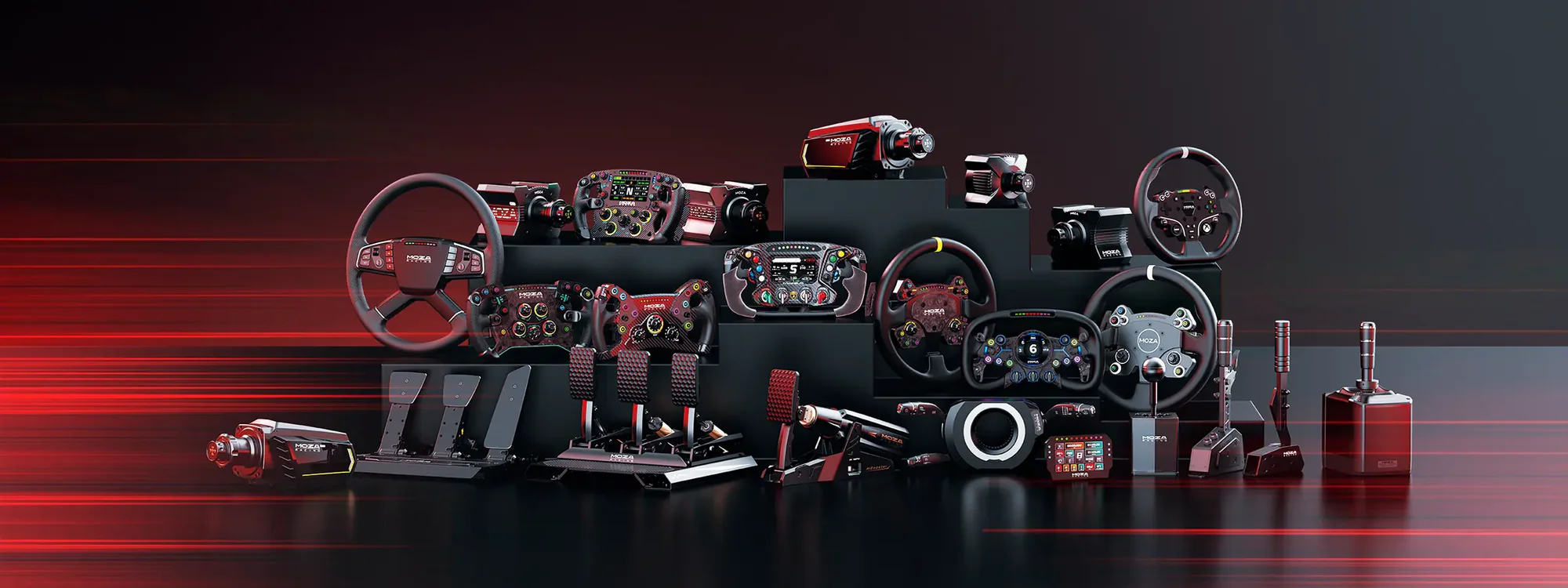
One notch above, we have the mid/high-end segment with brands such as FanatecFanatec, Moza Racing and Simagic , who offer highly immersive premium peripherals and advanced driving realism. These peripheral manufacturers are world-renowned and their products highly regarded in the industry, with a large fan-base worldwide, and experienced racers turning to them most often. These brands offer products that are, admittedly, more expensive than Logitech and TM, but are still quite affordable for what you get in return. When it comes to technology, you’ve got the best of the best:Direct Drive chainstay, Load Cell crankset, aluminum flywheel and more.
Finally, we have the brands that operate in the very high-end segment, with players such as Simucube and Heusinkveld who, as far as I’m concerned, represent the top manufacturers of sim-racing peripherals. Here, the watchwords are realism and sensations, with no limits. These manufacturers use premium materials for their products and invest heavily in research and development to create new technologies that push back the frontier between virtual and reality. As for price, it’s expensive – very expensive. With Simucube and Heusinkveld, you can easily get a device costing over €1,000, and a complete setup will cost you an arm and a leg. But that’s the price you have to pay for the best sim-racing products, such as an active pedalboard with a motor simulating the force needed to brake, for example.
Sim-racing setups
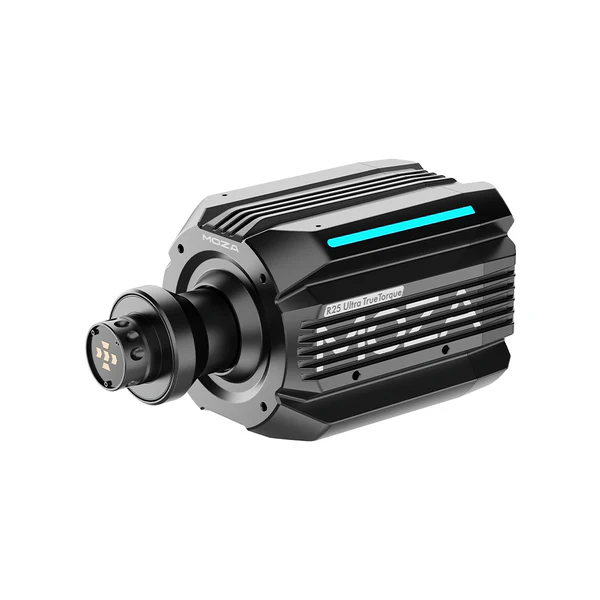
A sim-racing setup consists of all the peripherals you need to race on the small screen. For a standard setup, you’ll needa steering wheel,a base anda pedalboard to take part in the races in a fairly immersive way.
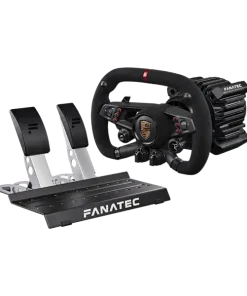
- Standard setups. Here, you’ll need a base, a steering wheel and a 2- or 3-pedal pedal board to do your racing. These setups are standard because they include the essential peripherals for sim-racing.
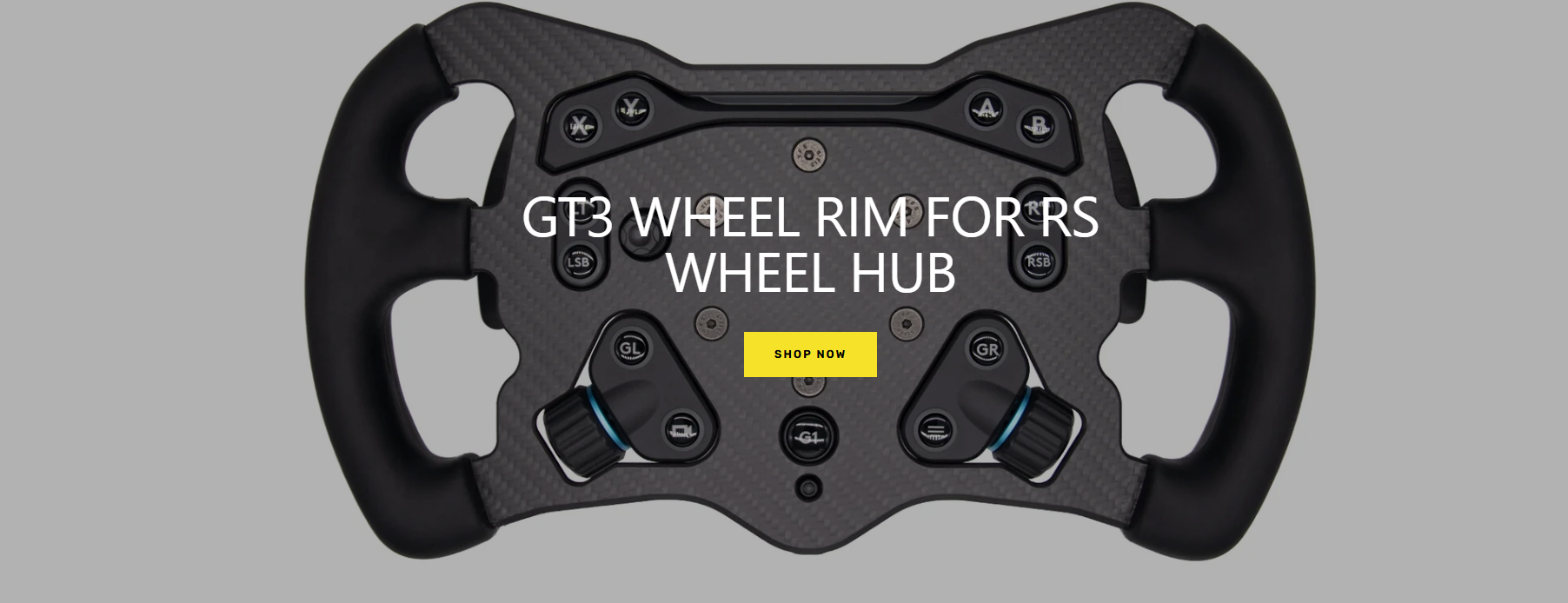
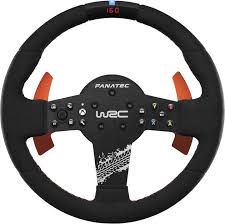
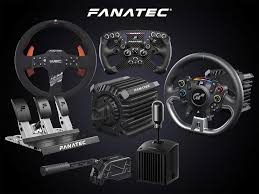
- Specialized setups. Here, we’re talking about setups specially assembled for a specific motorsport discipline, such as F1, GT3, rallying, etc. These setups include discipline-specific steering wheels, pedals with two or three pedals, shifters, handbrakes, dashboards, RevLEDs, etc. These setups include discipline-specific steering wheels, a pedalset with 2 or 3 pedals, a shifter, a handbrake, a dashboard, RevLEDs and so on. On these setups, customization really has no limits, except for the needs of the rider and also the ecosystem he’s on. For example, Fanatec ‘s ecosystem is highly customizable, with numerous compatible peripherals from the brand’s catalog.
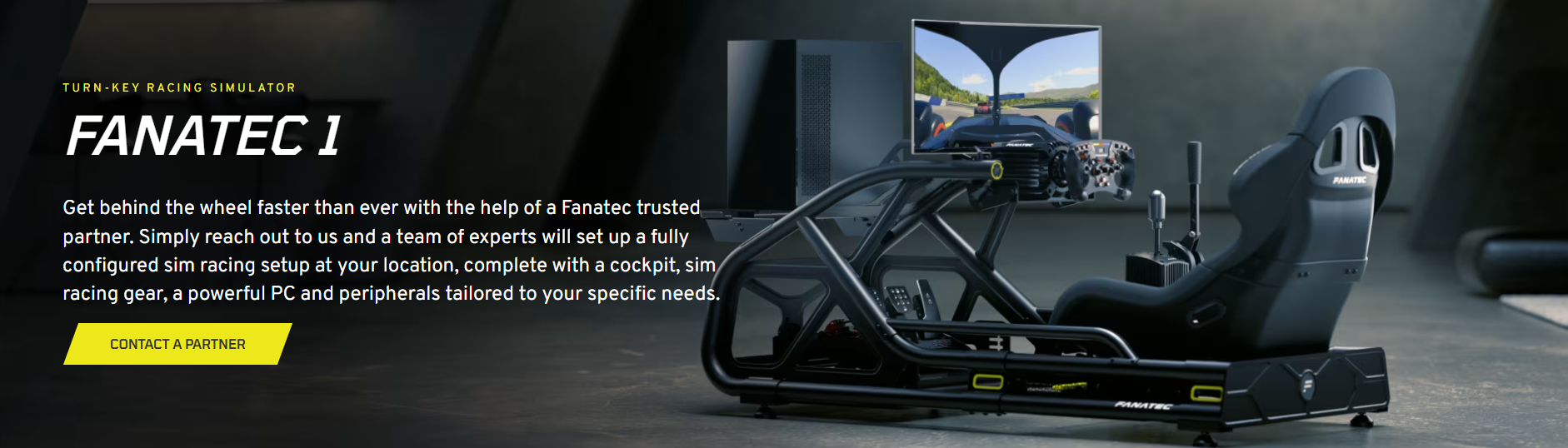
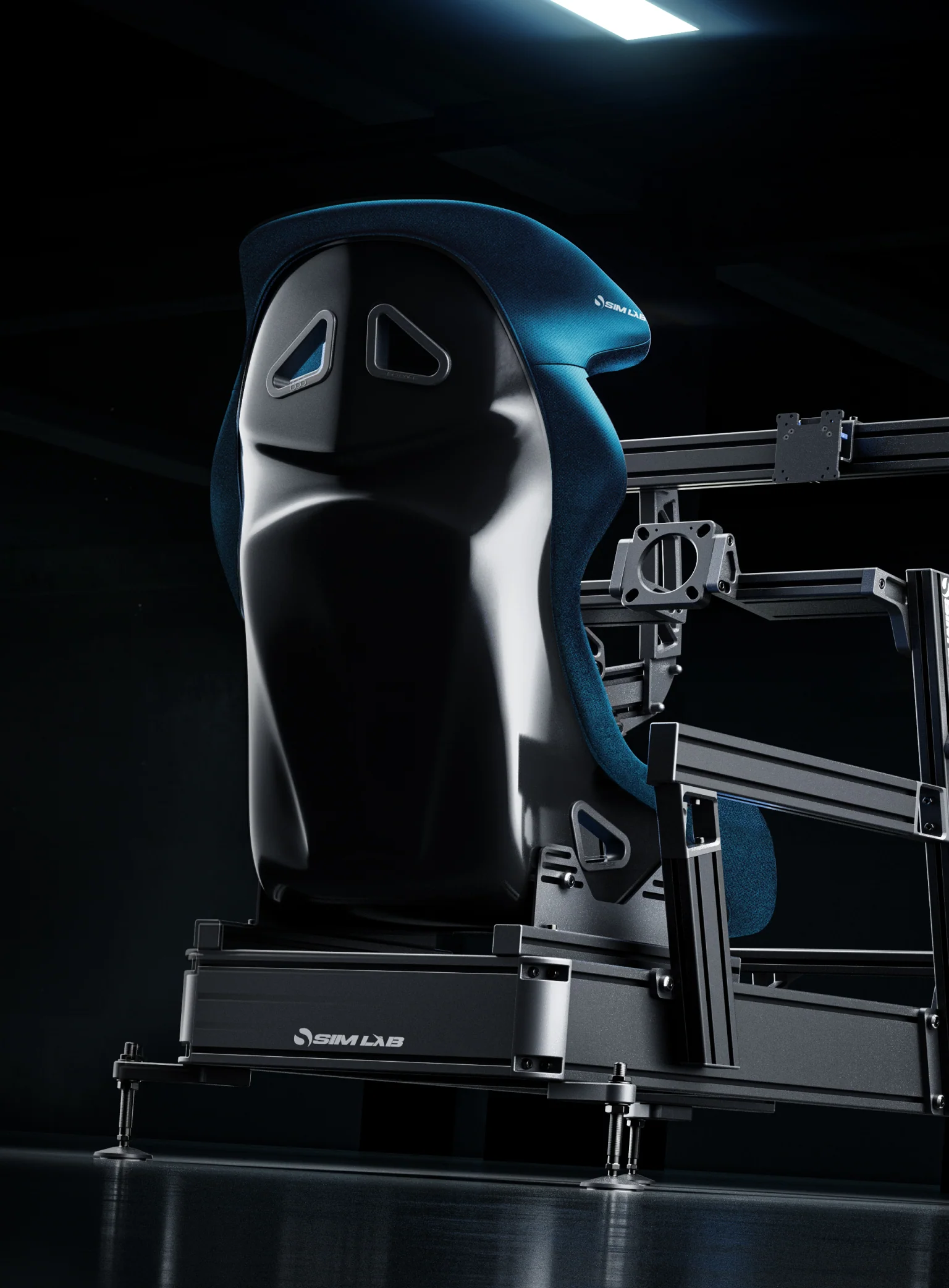
- Advanced setups. The advanced setups are based on the specialized ones and add a cockpit (standard or dynamic simulators), monitors, several supports, and so on. This is clearly the ultimate in sim-racing in terms of immersion, products and realism. You can also have so-called “hybrid” setups that are perfect for 2 different motorsport disciplines, such as F1 and GT, thanks to specific cockpits.